
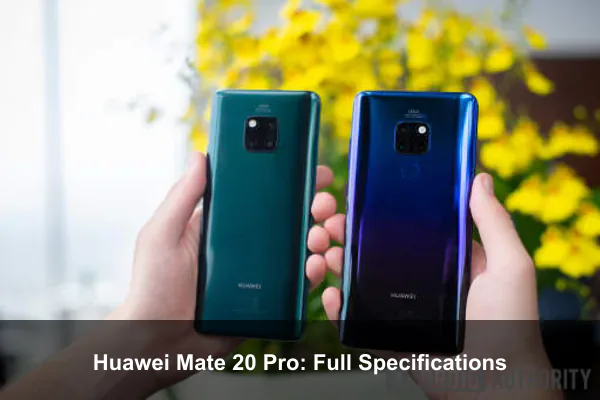
Huawei Mate 20 Pro arrived in October 2018 as a true flagship, pairing premium build quality with high-end display and charging features that were ahead of many rivals at the time.
In today’s market, it is best viewed as a legacy flagship option: strong core hardware for buyers comparing used premium phones against newer mid-range devices.
Full Specifications
Network
| Technology: | GSM / HSPA / LTE |
| 2G bands: | GSM 850 / 900 / 1800 / 1900 |
| 3G bands: | HSDPA 800 / 850 / 900 / 1700(AWS) / 1900 / 2100 |
| 4G bands: | 1, 2, 3, 4, 5, 6, 7, 8, 9, 12, 17, 18, 19, 20, 26, 28, 32, 34, 38, 39, 40 |
| Speed: | HSPA 42.2/5.76 Mbps, LTE Cat21 1400/200 Mbps |
Launch
| Announced: | 2018, October 16. Released 2018, October 31 |
| Status: | Discontinued |
Body
| Dimensions: | 157.8 x 72.3 x 8.6 mm (6.21 x 2.85 x 0.34 in) |
| Weight: | 189 g (6.67 oz) |
| Build: | Glass front (Gorilla Glass 5), glass back (Gorilla Glass 5), aluminum frame |
| SIM: | Nano-SIMNano-SIM + Nano-SIM |
| IP68 dust tight and water resistant (immersible up to 2m for 30 min) |
Display
| Type: | OLED, HDR10 |
| Size: | 6.39 inches, 100.2 cm2 (~87.9% screen-to-body ratio) |
| Resolution: | 1440 x 3120 pixels, 19.5:9 ratio (~538 ppi density) |
| Protection: | Corning Gorilla Glass 5 |
Platform
| OS: | Android 9.0 (Pie), EMUI 9.1 |
| Chipset: | Kirin 980 (7 nm) |
| CPU: | Octa-core (2×2.6 GHz Cortex-A76 & 2×1.92 GHz Cortex-A76 & 4×1.8 GHz Cortex-A55) |
| GPU: | Mali-G76 MP10 |
Memory
| Card slot: | Nano Memory (uses shared SIM slot) |
| Internal: | 128GB 6GB RAM, 128GB 8GB RAM, 256GB 8GB RAM |
| UFS 2.1 |
Main Camera
| Triple: | 40 MP, f/1.8, 27mm (wide), 1/1.7″, PDAF 8 MP, f/2.4, 80mm (telephoto), 1/4.0″, PDAF, OIS, 3x optical zoom 20 MP, f/2.2, 16mm (ultrawide), 1/2.7″, PDAF |
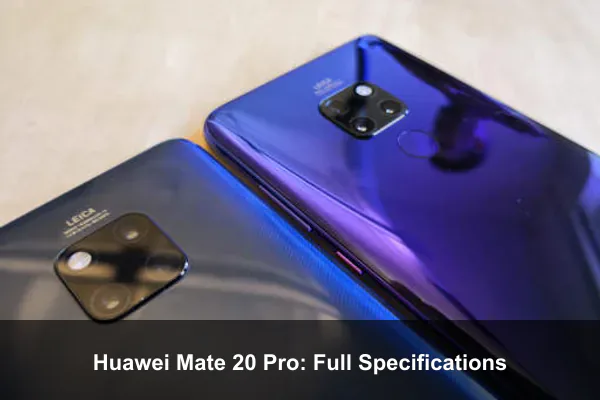
| Features: | Laser AF, Leica optics, dual-LED dual-tone flash, panorama, HDR |
| Video: | 4K@30fps, 1080p@60fps, 1080p@30fps (gyro-EIS), 720p@960fps |
Selfie camera
| Single: | 24 MP, f/2.0, 26mm (wide), 1/2.8″, 0.9µm |
| Features: | HDR |
| Video: | 1080p@30fps |
Sound
| Loudspeaker: | Yes, with stereo speakers |
| 3.5mm jack: | No |
| 32-bit/384kHz audio |
Comms
| WLAN: | Wi-Fi 802.11 a/b/g/n/ac, dual-band, DLNA, Wi-Fi Direct |
| Bluetooth: | 5.0, A2DP, aptX HD, LE |
| Positioning: | GPS (L1+L5), GLONASS (L1), BDS (B1), GALILEO (E1+E5a), QZSS (L1+L5) |
| NFC: | Yes |
| Infrared port: | Yes |
| Radio: | No |
| USB: | USB Type-C 3.1, OTG |
Features
| Sensors: | Face ID, fingerprint (under display, optical), accelerometer, gyro, proximity, barometer, compass |
Battery
| Type: | Li-Po 4200 mAh, non-removable |
| Charging: | 40W wired, 70% in 30 min 15W wireless 2.5W reverse wireless |
Misc
| Colors: | Emerald Green, Midnight Blue, Twilight, Pink Gold, Black |
| Models: | LYA-L09, LYA-L29, LYA-AL00, LYA-AL10, LYA-TL00, LYA-L0C |
| Price: | About 800 EUR |
Our Tests
| Performance: | AnTuTu: 273913 (v7), 391046 (v8) GeekBench: 9712 (v4.4) GFXBench: 17fps (ES 3.1 onscreen) |
| Display: | Contrast ratio: 254000:1 (nominal), 4.965 (sunlight) |
| Camera: | Photo / Video |
| Loudspeaker: | -28.9 LUFS (Average) |
| Audio quality: | Noise -87.7dB / Crosstalk -87.8dB |
| Battery (old): | Endurance rating 85h |
Price and Availability
The Huawei Mate 20 Pro offers a compelling combination of features and performance. While the base price is around €800, the actual cost may vary depending on your location and retailer. Below, you’ll find the approximate price of the Huawei Mate 20 Pro converted into various currencies. Please note that these are estimates based on recent exchange rates as of April 17, 2026 and may not reflect the exact price you’ll find at a retailer.
- United States: $942
- Japan: ¥150,006
- United Kingdom: £696
- Australia: A$1,316
- Canada: C$1,292
- Taiwan: NT$29,762
- Denmark: kr5.971
- Saudi Arabia: ﷼3,534
- South Korea: ₩1,393,267
- Germany: €800
- Brazil: R$4.706
- Vietnam: ₫24.606.515
- Kenya: KSh 121,813
- India: ₹87,837
- Indonesia: Rp 16.151.409
- Nigeria: ₦1,272,061
- Pakistan: ₨263,076
- Philippines: ₱56,543
- Bangladesh: ৳১,১৫,৮৫৭
Value in Today’s Market
At launch, the Mate 20 Pro sat around the 800 EUR class, so its original positioning was clearly premium. Its current appeal is value-for-money in the used segment, where features like IP68 sealing, QHD+ OLED, and fast wired plus wireless charging can still feel competitive.
Design and Build Quality
The glass-and-aluminum construction still feels flagship-grade, with Gorilla Glass 5 on both front and back. At 189 g with IP68 protection (up to 2 m for 30 minutes), it remains a solid option for users who prioritize durability and a premium hand feel.
Display Quality
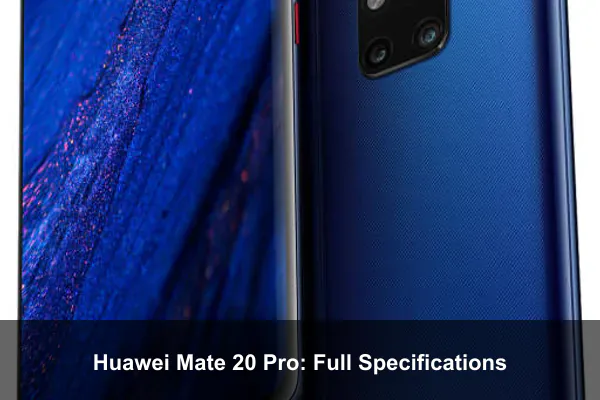
The 6.39-inch OLED panel supports HDR10 and runs at 1440 x 3120 resolution, delivering a very sharp image density. In testing, the display showed a very high contrast figure and good sunlight readability, which helps it hold up well for media and daily use.
Performance and Daily Speed
The Kirin 980 (7 nm), paired with UFS 2.1 storage and up to 8 GB RAM, still handles routine apps and multitasking reliably. Benchmark results from its test period place it below modern flagship levels, but performance is still usable for general productivity and moderate gaming.
Camera System
The Leica-branded triple camera setup is the main highlight: a high-resolution wide camera, dedicated 3x telephoto with OIS, and an ultrawide unit for framing flexibility. With Laser AF, 4K video recording, and 960 fps slow motion at 720p, it remains versatile for users who want multiple focal lengths in one device.
Battery and Charging
A 4200 mAh battery plus 40W wired charging (70% in 30 minutes) was a standout combination and still feels practical today. Wireless charging at 15W and reverse wireless charging add convenience that many older phones in this class do not offer.
Software and Long-Term Support
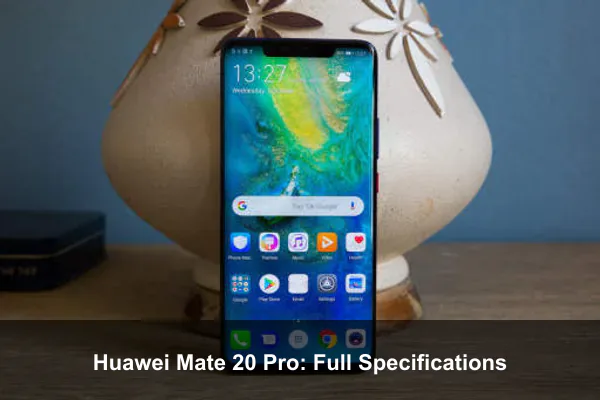
This phone launched with Android 9 and EMUI 9.1 and is now discontinued, so software longevity is the key tradeoff. Buyers should treat it as a hardware-first purchase rather than a long-update device.
Connectivity and Extras
Connectivity remains strong for a 4G flagship, including broad LTE band support, Wi-Fi ac, Bluetooth 5.0 with aptX HD, NFC, infrared, and USB Type-C 3.1. It also includes advanced positioning support (including dual-frequency L1+L5 on supported systems), though there is no 3.5 mm headphone jack and no 5G.
Who Should Buy Huawei Mate 20 Pro
This model suits users who want a premium older flagship with strong display quality, flexible cameras, and fast charging at a lower second-hand price. It is less suitable for buyers who prioritize current software support or want a future-proof 5G device.
Conclusion
Huawei Mate 20 Pro remains a well-rounded legacy flagship with standout hardware in design, display, camera flexibility, and charging. If your priority is used-market value over long-term software support, it is still an easy recommendation.
