
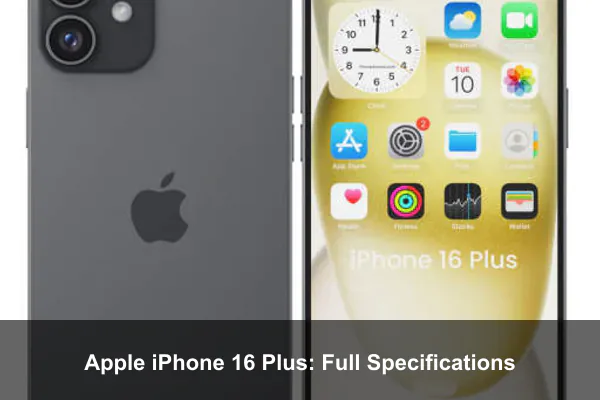
Apple iPhone 16 Plus is the large-screen option in the non-Pro iPhone 16 family, combining the A18 chip, a 6.7-inch OLED display, and strong endurance in a lighter package than the Pro Max tier.
Rather than repeating the full specs table, this guide focuses on buying value: real-world strengths, trade-offs, regional model differences, and where it fits against other big phones in 2026.
Full Specifications
Network
| Technology: | GSM / CDMA / HSPA / EVDO / LTE / 5G |
| 2G bands: | GSM 850 / 900 / 1800 / 1900 |
| CDMA 800 / 1900 | |
| 3G bands: | HSDPA 850 / 900 / 1700(AWS) / 1900 / 2100 |
| CDMA2000 1xEV-DO | |
| 4G bands: | 1, 2, 3, 4, 5, 7, 8, 12, 13, 17, 18, 19, 20, 25, 26, 28, 30, 32, 34, 38, 39, 40, 41, 42, 48, 53, 66 – A3290 |
| 1, 2, 3, 4, 5, 7, 8, 12, 13, 14, 17, 18, 19, 20, 25, 26, 28, 29, 30, 32, 34, 38, 39, 40, 41, 42, 48, 53, 66, 71 – A3082 | |
| 1, 2, 3, 4, 5, 7, 8, 11, 12, 13, 14, 17, 18, 19, 20, 21, 25, 26, 28, 29, 30, 32, 34, 38, 39, 40, 41, 42, 48, 53, 66, 71 – A3289 | |
| 1, 2, 3, 4, 5, 7, 8, 12, 13, 17, 18, 19, 20, 25, 26, 28, 30, 32, 34, 38, 39, 40, 41, 42, 48, 66 – A3291 | |
| 5G bands: | 1, 2, 3, 5, 7, 8, 12, 20, 25, 26, 28, 30, 38, 40, 41, 48, 53, 66, 70, 75, 76, 77, 78, 79 SA/NSA/Sub6 – A3290 |
| 1, 2, 3, 5, 7, 8, 12, 14, 20, 25, 26, 28, 29, 30, 38, 40, 41, 48, 53, 66, 70, 71, 75, 76, 77, 78, 79, 258, 260, 261 SA/NSA/Sub6/mmWave – A3082 | |
| 1, 2, 3, 5, 7, 8, 12, 14, 20, 25, 26, 28, 29, 30, 38, 40, 41, 48, 53, 66, 70, 71, 75, 76, 77, 78, 79 SA/NSA/Sub6 – A3289 | |
| 1, 2, 3, 5, 7, 8, 12, 20, 25, 26, 28, 30, 38, 40, 41, 48, 66, 70, 75, 76, 77, 78, 79 SA/NSA/Sub6 – A3291 | |
| Speed: | HSPA, LTE, 5G, EV-DO Rev.A 3.1 Mbps |
Launch
| Announced: | 2024, September 09 |
| Status: | Available. Released 2024, September 20 |
Body
| Dimensions: | 160.9 x 77.8 x 7.8 mm (6.33 x 3.06 x 0.31 in) |
| Weight: | 199 g (7.02 oz) |
| Build: | Glass front, glass back, aluminum frame |
| SIM: | Nano-SIM + eSIM + eSIM (max 2 at a time; International)eSIM + eSIM (8 or more, max 2 at a time; USA)Nano-SIM + Nano-SIM (China) |
| IP68 dust tight and water resistant (immersible up to 6m for 30 min) Apple Pay (Visa, MasterCard, AMEX certified) |
Display
| Type: | Super Retina XDR OLED, HDR10, Dolby Vision, 1000 nits (typ), 2000 nits (HBM) |
| Size: | 6.7 inches, 110.2 cm2 (~88.0% screen-to-body ratio) |
| Resolution: | 1290 x 2796 pixels, 19.5:9 ratio (~460 ppi density) |
| Protection: | Ceramic Shield glass (2024 gen), Mohs level 4 |
Platform
| OS: | iOS 18, upgradable to iOS 18.6 |
| Chipset: | Apple A18 (3 nm) |
| CPU: | Hexa-core (2×4.04 GHz + 4×2.20 GHz) |
| GPU: | Apple GPU (5-core graphics) |
Memory
| Card slot: | No |
| Internal: | 128GB 8GB RAM, 256GB 8GB RAM, 512GB 8GB RAM |
| NVMe |
Main Camera
| Dual: | 48 MP, f/1.6, 26mm (wide), 1/1.56″, 1.0µm, dual pixel PDAF, sensor-shift OIS 12 MP, f/2.2, 13mm, 120˚ (ultrawide), 0.7µm, dual pixel PDAF |
| Features: | Dual-LED dual-tone flash, HDR (photo/panorama) |
| Video: | 4K@24/25/30/60fps, 1080p@25/30/60/120/240fps, HDR, Dolby Vision HDR (up to 60fps), stereo sound rec. |
Selfie camera
| Single: | 12 MP, f/1.9, 23mm (wide), 1/3.6″, 1.0µm, PDAF SL 3D, (depth/biometrics sensor) |
| Features: | HDR, Dolby Vision HDR, 3D (spatial) audio, stereo sound rec. |
| Video: | 4K@24/25/30/60fps, 1080p@25/30/60/120fps, gyro-EIS |
Sound
| Loudspeaker: | Yes, with stereo speakers |
| 3.5mm jack: | No |
Comms
| WLAN: | Wi-Fi 802.11 a/b/g/n/ac/6/7, tri-band, hotspot |
| Bluetooth: | 5.3, A2DP, LE |
| Positioning: | GPS, GLONASS, GALILEO, BDS, QZSS |
| NFC: | Yes |
| Radio: | No |
| USB: | USB Type-C 2.0, DisplayPort |
Features
| Sensors: | Face ID, accelerometer, gyro, proximity, compass, barometer |
| Ultra Wideband (UWB) support (gen2 chip) Emergency SOS, Messages and Find My via satellite |
Battery
| Type: | Li-Ion 4674 mAh |
| Charging: | Wired, PD2.0, 50% in 30 min 25W wireless (MagSafe), 15W wireless (China only) 15W wireless (Qi2) 4.5W reverse wired |
Misc
| Colors: | Black, White, Pink, Teal, Ultramarine |
| Models: | A3290, A3082, A3289, A3291, iPhone17,4 |
| SAR: | 1.13 W/kg (head) 1.16 W/kg (body) |
| SAR EU: | 1.24 W/kg (head) 1.33 W/kg (body) |
| Price: | € 795.69 / $ 590.69 / £ 650.00 / ₹ 81,900 |
Our Tests
| Performance: | AnTuTu: 1727276 (v10) GeekBench: 7927 (v6) 3DMark: 4324 (Wild Life Extreme) |
| Display: | 1823 nits max brightness (measured) |
| Loudspeaker: | -25.2 LUFS (Very good) |
| Battery: | Active use score 18:49h |
EU LABEL
| Energy: | Class B |
| Battery: | 48:00h endurance, 1000 cycles |
| Free fall: | Class C (90 falls) |
| Repairability: | Class C |
Price and Availability
The Apple iPhone 16 Plus offers a compelling combination of features and performance. While the base price is around €796, the actual cost may vary depending on your location and retailer. Below, you’ll find the approximate price of the Apple iPhone 16 Plus converted into various currencies. Please note that these are estimates based on recent exchange rates as of March 23, 2026 and may not reflect the exact price you’ll find at a retailer.
- United States: $920
- Japan: ¥146,349
- United Kingdom: £690
- Australia: A$1,309
- Canada: C$1,261
- Taiwan: NT$29,388
- Denmark: kr5.936
- Saudi Arabia: ﷼3,449
- South Korea: ₩1,381,981
- Germany: €796
- Brazil: R$4.867
- Vietnam: ₫24.068.260
- Kenya: KSh 118,845
- India: ₹86,136
- Indonesia: Rp 15.602.473
- Nigeria: ₦1,246,177
- Pakistan: ₨256,374
- Philippines: ₱55,053
- Bangladesh: ৳১,১২,৭৩৯
Value Position in Apple’s Lineup
The iPhone 16 Plus targets buyers who want a bigger screen and battery life without paying Pro-level pricing. Compared with many premium large phones, it prioritizes consistency, software polish, and long-term usability over headline camera hardware.
Design and Everyday Durability
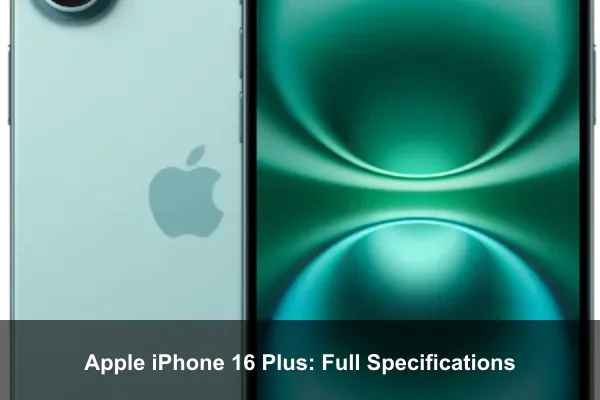
The glass-and-aluminum build keeps the phone premium while staying manageable for a 6.7-inch device. IP68 sealing, Ceramic Shield (2024 generation), and practical color options make it a safer choice for users who keep phones for multiple years.
Display Quality for Media and Outdoor Use
The Super Retina XDR OLED panel supports HDR10 and Dolby Vision, with strong readability outdoors. Measured peak brightness around 1823 nits confirms this is a dependable display for navigation, streaming, and daytime shooting.
Performance Headroom with A18
Apple’s 3 nm A18 and 8GB RAM deliver flagship responsiveness for gaming, multitasking, and editing short 4K clips. Benchmark results place it comfortably in high-end territory, giving the phone enough performance headroom for long ownership cycles.
Camera System: Reliable, Not Zoom-Centric
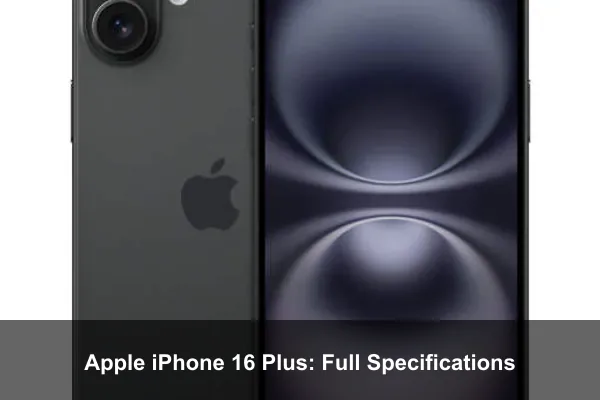
The 48MP main camera and 12MP ultrawide setup focuses on dependable photo quality, fast capture, and strong video features like Dolby Vision. It is excellent for daily photography and content creation, but users who prioritize long-range optical zoom should look at Pro-class alternatives.
Battery Life and Charging Practicality
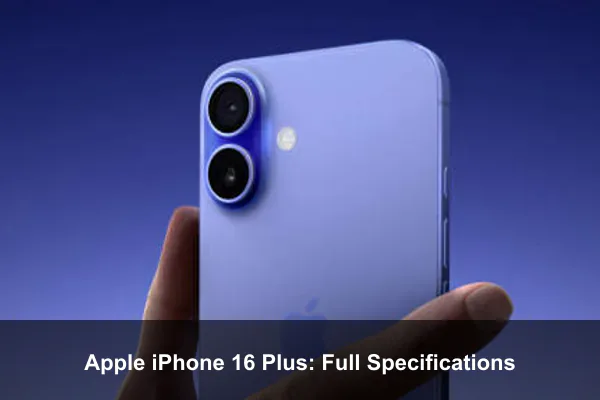
A 4674 mAh battery and active-use score of 18:49h make this one of the safer picks for heavy users. Wired charging reaches 50% in 30 minutes, while MagSafe, Qi2 wireless support, and reverse wired charging improve accessory flexibility.
Software, Security, and Smart Features
iOS 18 (upgradable to 18.6) keeps the experience smooth and tightly integrated with Apple’s ecosystem. Face ID, satellite-based emergency messaging, and second-generation UWB add practical safety and device-finding advantages beyond core specs.
Connectivity and Model Selection Matters
Wi-Fi 7, Bluetooth 5.3, NFC, and broad 5G support make the phone future-ready, but regional model choice is important. For example, mmWave support is tied to specific variants, so travelers and U.S.-focused buyers should verify model numbers before purchase.
Who Should Buy the iPhone 16 Plus
This phone fits users who want a big display, strong battery life, and stable flagship performance without moving to a heavier, pricier Pro Max device. It is a particularly smart fit for ecosystem users upgrading from older standard iPhones.
Conclusion
The iPhone 16 Plus is a balanced big-screen flagship with strong endurance, dependable cameras, and modern connectivity; choose it if battery life and day-to-day consistency matter more than advanced zoom hardware.
